Come and join us on Sunday, July 7 from 12 – 4PM at Dufferin Grove Park, just in front of Dufferin Mall. Let’s talk about the new program and what still needs to be done over food and drinks. We will also hear from some of the former careworkers and other organizers about the journey on how we got the new program. There will be music, food and drinks and you are encourage to bring your friends and co workers.
Did you know there are changes to your contract this year that impact your taxes? According to section 7, by signing the contract you are designating the liaison office to submit and file your tax returns. This means you no longer have a choice to file your own taxes or hire a professional!
There are many issues with giving the liaison office responsibility for taxes, including delayed and misplaced tax returns, lack of access to CRA account, and even theft. This isn’t fair!
What problems have you experienced with the liaison filing your taxes? Let us know so that we can collect evidence and show how big this problem is! Together we can unite and win change to benefit all farmworkers and our families.
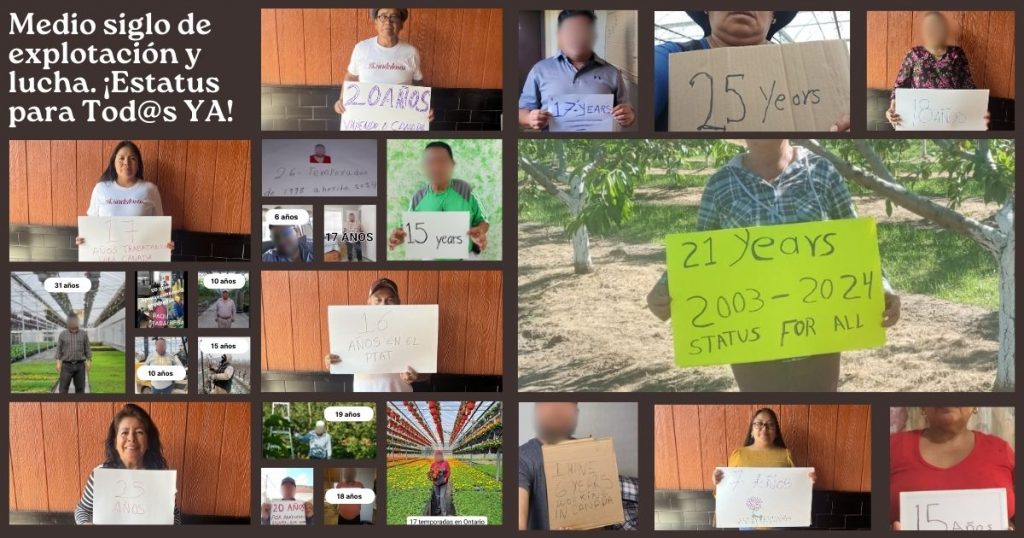
Hoy se marca un hito sombrío: el 50 aniversario del Programa de Trabajador@s Agrícolas Temporales de México (PTAT) en Canadá. Desde su creación el 17 de junio de 1974, miles de trabajador@s mexican@s han viajado a Canadá cada año para trabajar en campos e invernaderos, alimentar a sus familias y contribuir a la economía canadiense.
Leonel Nava, un trabajador agrícola veterano de México y miembro de la Alianza de Trabajadores Migrantes por un Cambio, ha sido parte de este programa durante 13 años. Nava enfatiza: “Este año la conmemoración de los 50 años del PTAT, y repito, es una conmemoración, no es una celebración porque no se pueden celebrar 50 años de injusticia y explotación”.
La Realidad del Trabajo Agrícola de l@s Migrantes en Canadá
L@s trabajador@s agrícolas migrantes desempeñan un papel crucial a la hora de llevar comida a las mesas canadienses, pero se enfrentan a una intensa explotación. Estos incluyen permisos restringidos por l@s empleador@s que limitan su movilidad laboral y hacen imposible hacer valer sus derechos, exclusión de derechos laborales básicos y protecciones como horas máximas de trabajo y pago de horas extras, y condiciones de vida deficientes en viviendas controladas por los empleadores. A menudo, se ven obligados a trabajar en entornos inseguros, son expuestos a pesticidas peligrosos y maquinaria pesada sin el entrenamiento adecuado. Como resultado de estas leyes injustas, trabajadores agrícolas migrantes enfrentan lesiones, abusos y, a veces, incluso la muerte, con poco o ningún recurso para obtener justicia.
Gabriel Camacho, un campesino mexicano de Tlaxcala—el primer estado mexicano en unirse al PTAT—comparte su experiencia: “Hemos soportado mucha explotación por parte de l@s patrones porque siempre nos han visto como máquinas que no se cansan, como robots que no tienen derecho a protestar, no les importan nuestros sentimientos y el dolor de estar lejos de la familia”.
Una industria en crecimiento, una injusticia en aumento
A pesar de su papel esencial, a menudo se pasan por alto las contribuciones de l@s trabajador@s migrantes. Sólo en 2022, la industria agroalimentaria de Canadá generó la asombrosa cifra de 143.800 millones de dólares, lo que representa alrededor del 7% del PIB del país.
Sin embargo, l@s trabajador@s migrantes que son fundamentales para este éxito son sistemáticamente excluid@s de los programas de residencia permanente, incluido el Piloto de Migración Agroalimentario, que les deja sin los derechos básicos de los que disfruta cualquier otra persona.
Estatus de residente permanente a la llegada
Luisa Ortiz-Garza, organizadora de la Alianza de Trabajadores Migrantes por un Cambio agrega: “Durante 50 años, l@s trabajador@s agrícolas mexican@s han sacrificado sus vidas, sus cuerpos y sus familias para hacer crecer la economía canadiense, pero han sido excluid@s de los derechos y protecciones que sólo se puede acceder a través del estatus de residente permanente. Hoy, l@s trabajador@s agrícolas mexican@s quieren recordarles a l@s canadienses que son seres humanos que merecen igualdad, justicia y dignidad”.
Trabajador@s agrícolas temporales regresar a Canadá año tras año, a menudo por hasta ocho meses seguidos. Solo en 2023, llegaron 24,772 trabajador@s desde México bajo el PTAT. Si bien pasan una parte importante de sus vidas en Canadá, est@s trabajador@s todavía se ven privad@s de los derechos y la seguridad que conlleva el estatus de residente permanente.
El aniversario del ingreso de México al PTAT no es sólo un momento para reflexionar sobre el pasado, sino una oportunidad crítica para abordar los problemas sistémicos que han plagado el programa durante décadas. Es un llamado a la acción para que Canadá dé prioridad a los derechos y la dignidad de tod@s l@s trabajador@s migrantes.
Únase a nosotr@s para pedirle al gobierno federal que garantice el estatus de residente permanente para tod@s.
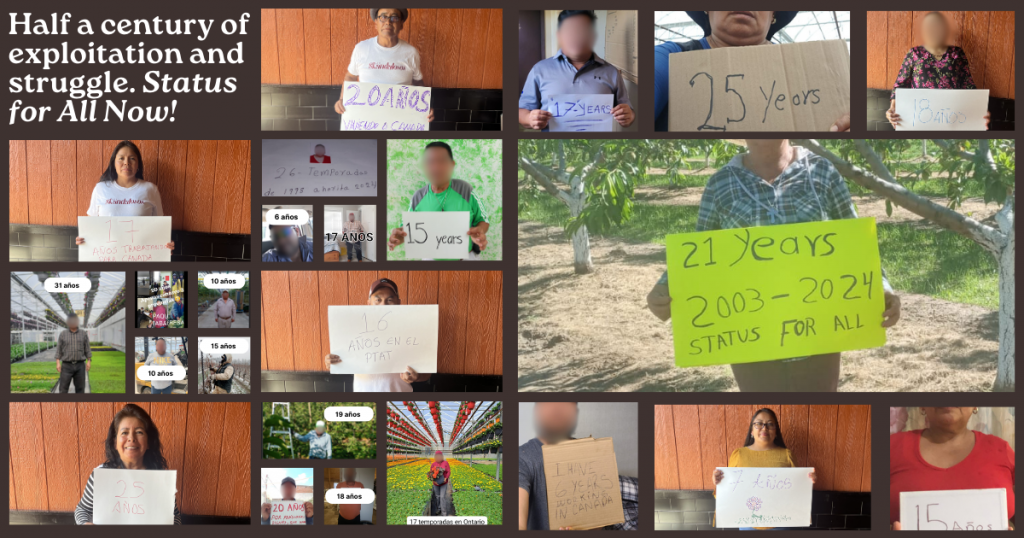
Today marks a somber milestone: the 50th anniversary of the Mexican Seasonal Agricultural Worker Program (SAWP) in Canada. Since its inception on June 17, 1974, thousands of Mexican workers have traveled to Canada each year to toil in fields and greenhouses, feeding families and contributing to the Canadian economy.
Leonel Nava, a veteran farm worker from Mexico and a member of the Migrant Workers Alliance for Change, has been part of this program for 13 years. Nava stresses, “This year’s commemoration of the 50 years of the SAWP, and I repeat it is a commemoration, not a celebration because you cannot celebrate 50 years of injustice and exploitation.”
The Reality of Migrant Farm Work in Canada
Migrant agricultural workers play a crucial role in putting food on Canadian tables, yet they face intense exploitation. These include employer-restricted permits that limit their job mobility and makes it impossible to assert their rights, exclusion from basic labor rights and protections such as maximum hours of work and overtime pay, and substandard living conditions in employer-controlled housing. Often, they are forced to work in unsafe environments, have to deal with hazardous pesticides and heavy machinery without proper training. As a result of these unfair laws, migrant agricultural workers face injuries, abuse, and sometimes even death, with little to no recourse for justice.
Gabriel Camacho, a Mexican farm worker from Tlaxcala—the first Mexican state to join the SAWP—shares his experience: “We have endured a lot of exploitation from the bosses because they have always seen us as machines that don’t get tired, like robots that have no right to protest, they do not care about our feelings and pain of being away from the family.”
A Growing Industry, A Growing Injustice
Despite their essential role, the contributions of migrant workers are often overlooked. In 2022 alone, Canada’s agri-food industry generated a staggering $143.8 billion, making up about 7% of the country’s GDP.
Yet, migrant workers who are fundamental to this success are systematically excluded from permanent residency programs, including the Agri-Food Immigration Pilot, which leaves them without the basic rights enjoyed by anyone else.
Permanent Resident Status on Arrival
Luisa Ortiz-Garza, a staff organizer with the Migrant Workers Alliance for Change adds, “For 50 years Mexican farm workers have sacrificed their lives, their bodies, and their families to grow the Canadian economy but have been excluded from rights and protections that are only accessible through permanent resident status. Today, Mexican farm workers want to remind Canadians that they are humans who deserve equality, fairness and dignity.”
Seasonal agricultural workers return to Canada year after year, often for up to eight months at a time. In 2023 alone, 24,772 workers arrived from Mexico under the SAWP. While they spend a significant portion of their lives in Canada, these workers are still deprived of the rights and security that come with permanent resident status.
The anniversary of Mexico’s entry into the SAWP is not just a moment to reflect on the past, but a critical opportunity to address the systemic issues that have plagued the program for decades. It is a call to action for Canada to prioritize the rights and dignity of all migrant workers.
Join us to call on the federal government to ensure permanent resident status for all.
On Father’s Day this Sunday, June 16 at 1:30pm, join undocumented fathers and families to hear about our long years of family separation, the difficulties we face working and living in Canada, and why we need regularization and permanent resident status for all undocumented people. Come with your father or your family. Bring hand-made signs and spend time with us. We will meet in front of MP Chrystia Freeland’s office at 344 Bloor Street, Toronto, Ontario. Sign up below!
On June 3, the Immigration Minister Marc Miller announced a new program for caregivers abroad that ensure permanent residence on arrival. Find out the new rules and timelines, how we organized to win this program and what we need to do to ensure that the program will be implemented without exclusions.
Come and join us online on Thursday, June 13 at 8 PM EST (5 PM BC and 6 PM AB). Invite your friends and co-workers and celebrate our win! Register here to get the zoom link for the event.
The federal government promised permanent status for undocumented migrants this Spring, and time is running out! Now more than ever, we need to have faith for a better tomorrow and know that we will keep fighting for each other.
Join the MWAC prayer and action online meeting on Friday, June 14 at 12pm Toronto time to connect with other migrants like you and make moves together toward a better future!
We’re calling for equal rights and a better life for all migrants – will you join us?
If you’re a migrant farmworker on the Seasonal Agricultural Worker Program (8 months contract or less), your contract has changed this year and you have NEW rights!
Some of these changes include:
Dryers now mandatory
Internet access now mandatory
You are now BANNED from filing your own taxes 🤯
Sign up below to join us online on Wednesday, July 17 at 8pm to learn about how these changes affect you and what we can do about it. In this free and confidential information session, we’ll also talk about what you can do if your contract is being breached and what support is available.
Mother’s Day is here, and many of us migrant caregivers will be spending it alone without our families. We are worried that we will not be reunited with them if the caregiver pathway programs end in June 2024. This is not fair!
Join us and other migrant caregivers like you this Sunday, May 12 at 12pm for an in-person action planning meeting to make decisions about how we want to raise our voices for justice and permanent residency status for all!
Start: Sunday, May 12, 2024•12:00 PM
Location: MWAC Office• 720 Spadina Ave., Toronto, ON M5S 2T9 CA
The Escarraga family – including Sara and her 4 children – have been issued 2 year Temporary Resident Permits after community members rallied support to stop their deportation.
Their deportation scheduled for July 3, 2024 was stopped because hundreds of people wrote letters to Prime Minister Trudeau and Immigration Minister Marc Miller calling on the federal government to take action.
Prime Minister Trudeau promised regularization – permanent resident status for undocumented people – in December 2021. Had the promise been kept, this family would not have gone through this crisis.