Information about English test, for new Permanent Residency program
In May, the Canadian government launched a program called the Pathway to Permanent Residence for Essential Workers. This is a very small opportunity for only 30,000 workers in a number of essential sectors to apply for PR, but only if they can meet certain requirements.
We know that these requirements are unfair and shut out most workers like us:
- Having to pass an English exam, with a minimum of level 4, is unfair because English is not a requirement for farm workers to come to Canada to work.
- While working in Canada workers do not have time to study and the ones that have learned English are self-taught and it is English for work, so an English test where you have to read, write, speak and listen is not fair or realistic.
- The vast majority of agricultural workers live in rural communities far from any center where they can take the test.
Migrant Workers Alliance for Change has been supporting workers interested in taking the test to apply for permanent residence with a preparation course for the exam. So far, we know of 6 workers who have passed the exam after taking this course.
Many workers are reaching out to us with questions about how to apply for PR through this new program. Below is some information about the English test.
Without the result of the English test workers will not be able to send the application for permanent residence.
This is a general description of the language requirements for this Permanent Residence program:
- Test approved by the government of Canada are:
Only GENERAL is accepted
Only can be done on computer
Approximate price $ 280 CAD
Only GENERAL is accepted
Available in two formats: On paper, due to COVID it was difficult to find a center to take the exam on paper, but for July and August there are more places and dates available.
Paper exam $ 287.60 + tax
Computer exam $ 300 + tax
Note: Prices change depending on the province and city where you are.
Recommendations:
- Migrant workers, who take the IELTS test, have the option of paper-based, oral section is done in person.
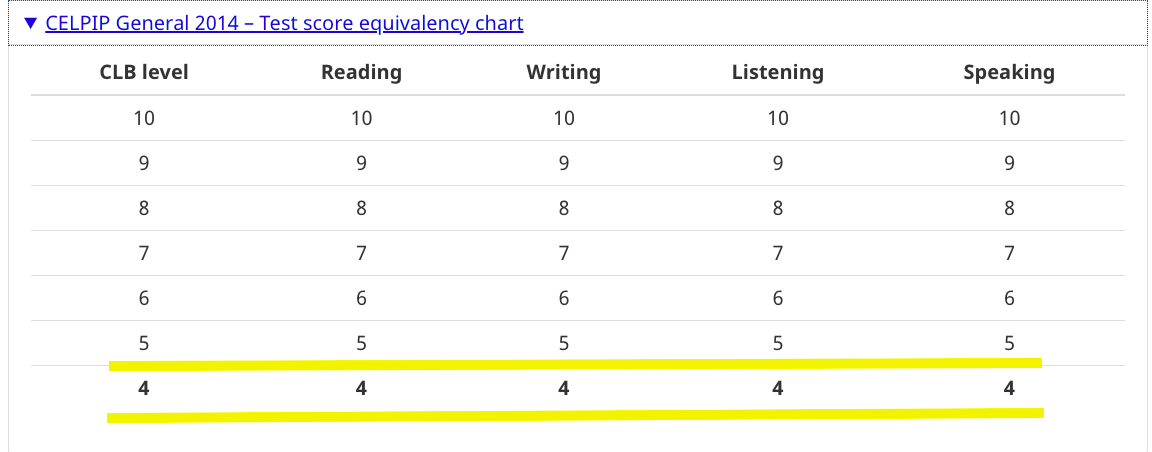
- Both exams are scored with a score of 1-9, for people who apply for permanent residence it is ONLY required that they obtain a minimum of 4 average points.
CELPIP required score by section:
IELTS required score by section:
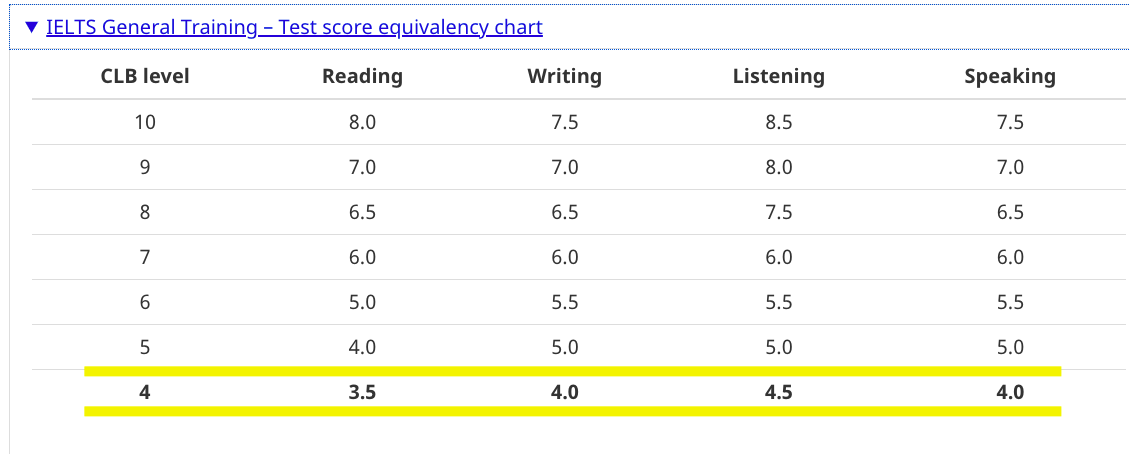
- A score of 4 is less than 50% of the maximum grade which is 9 and is considered one level less than the intermediate level.
- Registering for the exam is somewhat complicated as at this time you can only book online.
Migrant workers who are in rural areas face the challenge that there are not always exam centers nearby. In addition to having to pay with a credit card, there is the option of buying a prepaid visa or mastercard, or if workers have a debit visa can be used.
We have consulted with English teachers who are dedicated to preparing students to take these exams and their conclusion is that the level that the government is asking for is something that even non-English speaking workers can achieve.
Teacher tips:
- Learn the mechanisms of the exam
- Learn the correct way to write an email: greeting, farewell, formally and informally.
- For the other sections the answers are in the questions or the text.
- Both tests are NOT designed to measure your knowledge but your abilities.
- For workers who speak Spanish it is advisable to take the IELTS test since they can present it written by hand, the reading section is not very difficult since most of the vocabulary has Latin roots. In addition, the oral section is a face-to-face conversation.
- There are several videos on youtube where you can practice and learn the listening section.
This program was created thanks to workers who have raised their voices. We must continue fighting for a permanent residence status for all, without leaving anyone behind, united we are stronger!
Study Materials:
- Videos on Differences Between CELPIP and IELTS
- CELPIP vs IELTS: What Are The Main Differences Between The Tests?
- CELPIP vs IELTS: Which is Better for Canada Visa? – Ronen Kurzfeld Immigration Law Firm
- CELPIP vs IELTS
- Practice Tests:
- https://exam-practice.com/celpip-or-ielts/
- A quick look at General Training Writing Test
- CELPIP Writing Question & Answer Sample – Task 1
- IELTS preparation guide
- Full test sample
- Audios to practice:
- links – LISTENING
- Videos to practice:
66 years of organizing and winning!
Migrant domestic workers have been coming to Canada without full immigration status – which means without full rights – since 1955. We have been exploited and excluded for 66 years. But it also means we, and the care workers before us, have been organizing and winning for 66 years!
Today on International Domestic Workers Day, we reflect on the history of migrant care worker organizing:
- Black Caribbean women, along with many other workers, led the fight to create a path to permanent residence (PR) for migrant care workers in the 1980s.
- In the 1990s, workers’ struggles forced the removal of a number of exclusionary requirements, but care workers were forced to live in employer homes.
- In 2010, migrant care workers won the Juana Tejada law, removing the requirement for a second medical exam to get PR.
- In 2014, migrant care workers won an end to the live-in requirement. But a cap of 2,750 per year was put on PR applications, and unfair requirements for English and education were put in place.
- In 2017, migrant care workers led the fight to remove medical inadmissibility rules, which led to them being significantly reduced, though they remain in place.
- In 2019, migrant care workers won an Interim Pathway to allow many workers in Canada to get PR without the exclusionary requirements introduced in 2017.
- And during COVID-19, migrant care workers are organizing across the country for vaccine access, mobility and immigration and labour rights.
WE hold up the Canadian economy – temporary foreign workers like all of us make up 10% of private household workers in Canada. Thousands of undocumented mostly racialized women are doing in-home domestic work, and even more are working in long-term care homes and as personal support workers.
But unfair immigration rules push us into abusive jobs; tie us to our employers for health care and housing; restrict us from being able to study freely; put us at risk of exploitation from recruiters and consultants, and for deportation; and separate us from our families for YEARS!
We know the rules only change if migrant care workers come together and fight for our rights. Join us!
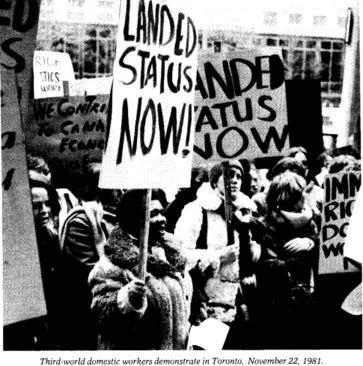
No time to wait! Status For All!
A lot has happened these last couple of months.
- The Home Child Care Provider Pilot Program closed its doors on April 30th after reaching its cap of 2750 and being open for only four months.
- On May 6th, the new PR program for essential workers opened up, allowing some of us to apply. But those of us who have not completed or passed the English test, or laid off from work or don’t have a valid work permit can’t apply. Read more on the program and how to apply here.
- Under pressure from migrant care workers, the government has finally agreed to process 6,000 out of 12,000 of us this year that are waiting for a decision on our applications. But thousands of us have already applied for PR and are still waiting for a decision on our applications!
This is why on May 9th, Mothers Day, migrant care workers, undocumented people and supporters visited Members of Parliament offices across the country with thousands of petitions calling for Landed Status Now and Status for All (see our Landed Status Now petition here). See below for photos and click for some media coverage.
Migrant Care Workers delivered petitions to MP Heather McPherson in Edmonton!


The Vancouver Committee for Domestic Workers’ and Caregivers Rights along with Sanctuary Health and Migrante-BC delivered petitions to MP Harjit Sajjan in Vancouver!

Migrants and undocumented people hit the streets in Montreal!

Rules are changing, but too many of us are excluded. Many of us are still separated from our families and unable to access equal rights and protections in the middle of a global pandemic.
The Immigration Minister Mendicino keeps making promises but we have no time to wait, we must get louder! Join us in-person or online on June 20th for actions happening across the country to demand better: No waiting, No caps, No barriers, Status For ALL!
Sign up and share with your friends and other care workers!
United, we are stronger!
Luis Mendoza ¡PRESENTE! – Líder de Trabajadores Agrícolas Migrantes
“Conocí a Luis hace unos 8 años. Estaba muy interesado en crear una red de compañeros trabajadores agrícolas para que juntos pudiéramos luchar y organizarnos sobre las injusticias que atraviesan los trabajadores.
Luis y yo hablábamos con nuestros compañeros de trabajo, quienes poco a poco se fueron uniendo y simpatizando y empatizando con esta pelea. Hicimos un grupo pequeño y lo recuerdo siempre entusiasmado, siempre tratando de convencer a sus compañeros de trabajo, a veces decepcionandose pero siempre muy convincente, siempre muy firme.
Estaba convencido de la importancia y el valor de la participación de las mujeres en este tema de organizarnos. Sabía que las mujeres tenemos mucha fuerza, mucho poder. Y también las muy difíciles historias que vivimos las mujeres en este programa entendió las razones por las que tomamos la difícil decisión de dejar a nuestros hij@s.
Nuestro amigo Luis plantó la semilla, ahora el árbol está creciendo un poco. El resto depende de todos nosotros, los trabajadores agrícolas migrantes activos y los que ya no estamos activos. Este no es un trabajo fácil, es un trabajo meticuloso pero vale la pena para que podamos allanar el camino para los que vienen detrás de nosotros y para los que están pasando por la lucha.
Esto es una pérdida no sólo como persona, nos dejó un buen compañero, nos dejó un buen amigo, nos dejó un luchador social que a veces hacía este trabajo solo. A veces con mucho apoyo, pero siempre con mucha ilusión y mucha esperanza de que los trabajadores se organicen y luchen. Lo importante es que sigamos con el trabajo que siempre quiso. La lucha continúa y esta es la mejor manera de celebrarlo, ¡la lucha sigue! ”
Ana, Trabajadora Agrícola Migrante
Era junio de 2019. En el sótano de una iglesia en Niágara, los funcionarios del gobierno federal se reunieron con 40 trabajadores agrícolas miembros de la Alianza de Trabajadores Migrantes por un Cambio.
El gobierno federal quería hablar sobre ligeras modificaciones al permiso de trabajo dependiente del empleador, que solo cambiaría de nombre pero mantendría la explotación. Liderando a los trabajadores estaba Luis Mendoza, un trabajador agrícola y activista desde hace mucho tiempo, quien jugó un papel integral y activo en el establecimiento de la Alianza de Trabajadores Migrantes por un Cambio en la región de Niágara.
Cuando Luis comenzaba a hablar, toda la habitación se quedaba en silencio. Todos conocían a Luis.
“He venido a trabajar en el programa SAWP durante 24 años. Hoy quiero decirles que le he dado 24 años de mi vida a este país, entonces Canadá me debe algo, Canadá le debe algo a los trabajadores agrícolas migrantes. Se nos debe el estatus de residencia permanente “.
El 19 de mayo de 2021 Luis Mendoza falleció por complicaciones por COVID-19 en México. Después de venir a Canadá durante 30 años, no pudo regresar esta temporada. Luis quería que algún día su familia y sus hijas se unieran a él en Canadá, el país donde pasó la mayor parte de su vida. Murió sin que Canadá le devolviera lo que le debía.
Luis, un líder nato, ayudó a facilitar las reuniones de más de cuarenta trabajadores agrícolas en junio y julio de 2018. En una reunión con el gobierno federal en agosto de ese año, leyó una declaración conjunta escrita por los trabajadores.
Una vez que terminó de leer, agregó:
“Quiero enfatizar: ¿por qué los empleadores solo quieren mano de obra barata? Quieren que vengan trabajadores pero no quieren pagar los salarios adecuados. Muchos de nosotros enfermamos. Tenemos que pagar cuando vamos al hospital. Quieren mano de obra pero no quieren pagar.
Seguimos viviendo en esclavitud en el siglo XXI. Muchos de nosotros hemos crecido aquí, hemos criado a nuestras familias, pero exigimos que el gobierno cambie las condiciones de trabajo. Muchos de los servicios que queremos y merecemos solo están disponibles para personas con residencia permanente “.
Luis sabía que la única forma en que los migrantes podían garantizar la dignidad era organizándose. Animó a sus compañeros de trabajo a unirse y hablar para exigir igualdad de derechos, dignidad y justicia. Luis no era de los que se callaban al priorizar las necesidades y las voces de los trabajadores. Ofreció fuertes críticas sobre los sindicatos y los grupos de activistas y se aseguró de que estas fueran escuchadas.
En 2019, cuando la granja de Pioneer, donde Luis trabajaba, se incendió y se destruyeron las viviendas de los trabajadores agrícolas, Luis ayudó a organizar a los trabajadores y se aseguró de que todos fueran atendidos. En 2020, cuando el brote de COVID-19 golpeó la finca, Luis estaba allí, apoyando a los trabajadores, manteniéndolos organizados. Una de sus últimas acciones como miembro de MWAC fue la construcción de una ofrenda – un altar – para el Día de los Muertos en los escalones de la entrada de la oficina de un parlamentario local para honrar a los trabajadores agrícolas que murieron de COVID-19 y para exigir el estatus para todos.
En junio de 2020, para lanzar una campaña nacional por el estatus para todos, Luis dijo:
“Hasta el día de hoy, no he visto ninguna mejora en el trato de los trabajadores agrícolas. Las precarias condiciones de vida en su mayor parte siguen siendo las mismas. ¡La discriminación y el racismo con el que nos tratan algunos empleadores no ha cambiado! En Canadá hay gente que ni siquiera sabe que existimos, que somos humanos. Nosotros, los invisibles, cultivamos las frutas y verduras que comes e incluso las flores en tu mesa, pero nos falta la opción de dejar los malos trabajos y resistir las injusticias que nos infligen los empleadores abusivos que nos tratan como esclavos. Creo que Canadá nos debe algo y que esta es la oportunidad para que pague su deuda dándonos la Residencia Permanente. Dejamos atrás nuestro sudor aquí, trabajando desde el amanecer hasta el atardecer. Hemos contribuido al desarrollo y crecimiento económico de Canadá. Creo que lo justo es que todos los migrantes tengan acceso a la Residencia Permanente. ¡Únase a nosotros y llame al primer ministro para exigir estatus ahora! “
Y, sin embargo, después de casi tres décadas de trabajar en campos y granjas, cuando estaba enfermo, no recibía la atención médica que pagó aquí. Canadá no le dio nada. Pero Luis ayudó a establecer una organización de trabajadores agrícolas migrantes. Murió y su trabajo por la dignidad y la liberación sigue vivo.
No descansaremos hasta que el sueño de Luis se haga realidad, y todos y cada uno de los que trabajamos en el campo tengamos los mismos derechos, dignidad y condición de residente permanente que cualquier otra persona.
Nos despedimos de Luis, pero sabemos que se queda en la lucha con nosotros. Luis Mendoza ¡PRESENTE!
Puede donar para apoyar a la familia de Luis aquí: https://gofund.me/76c34d85
—
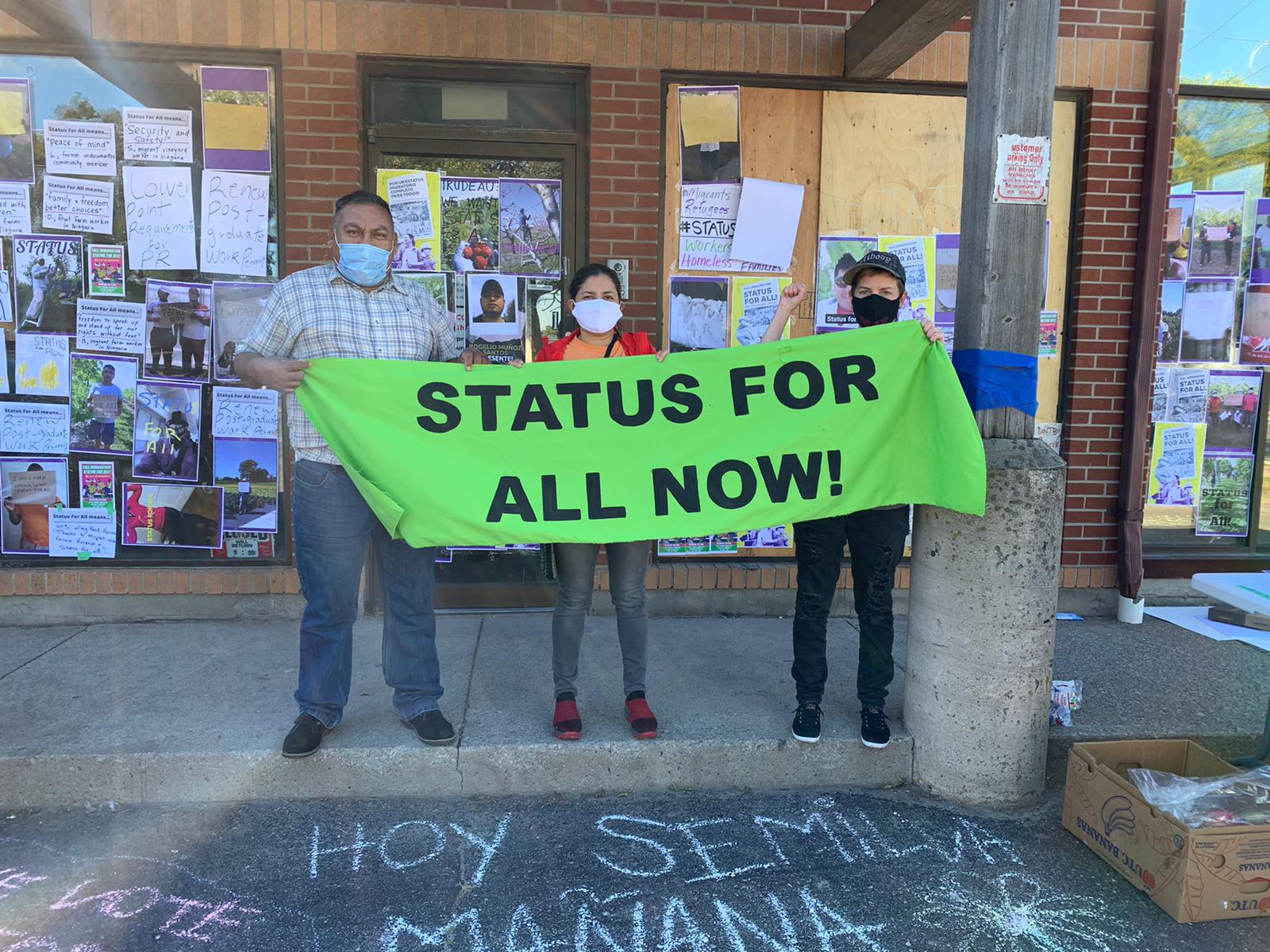
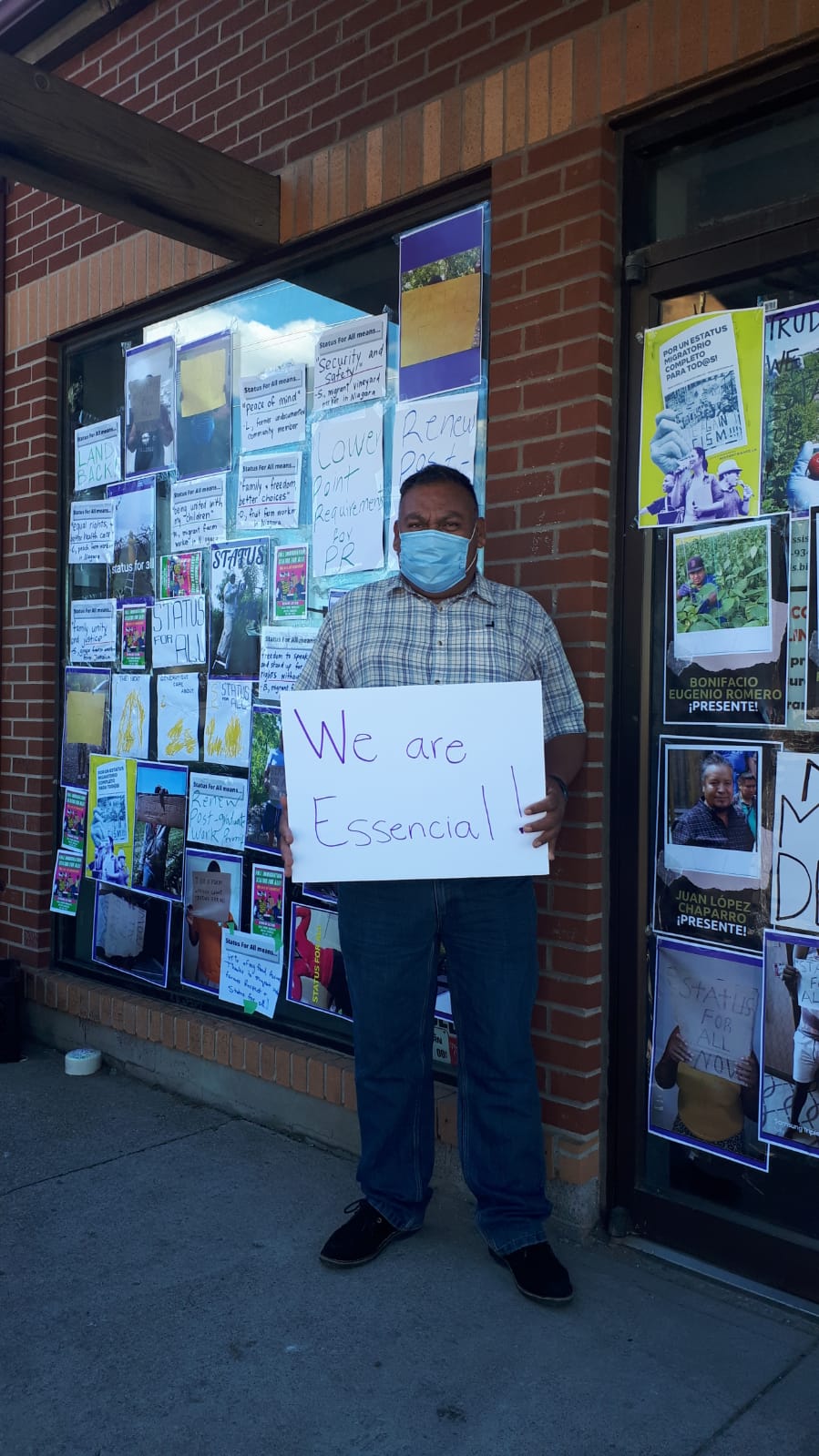


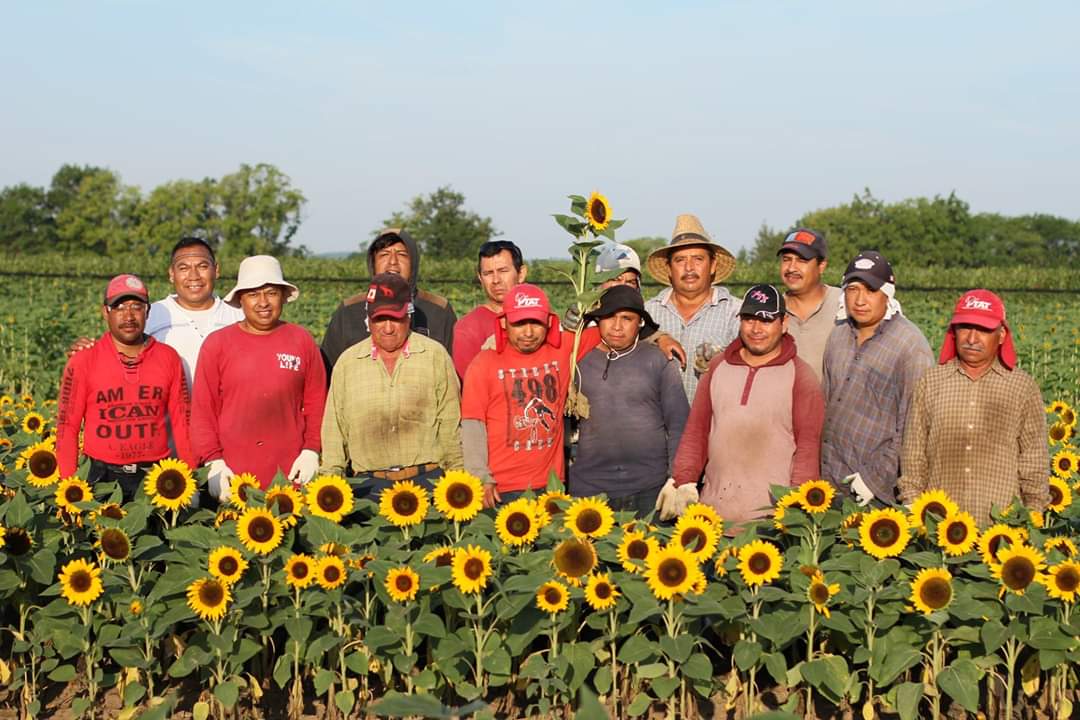
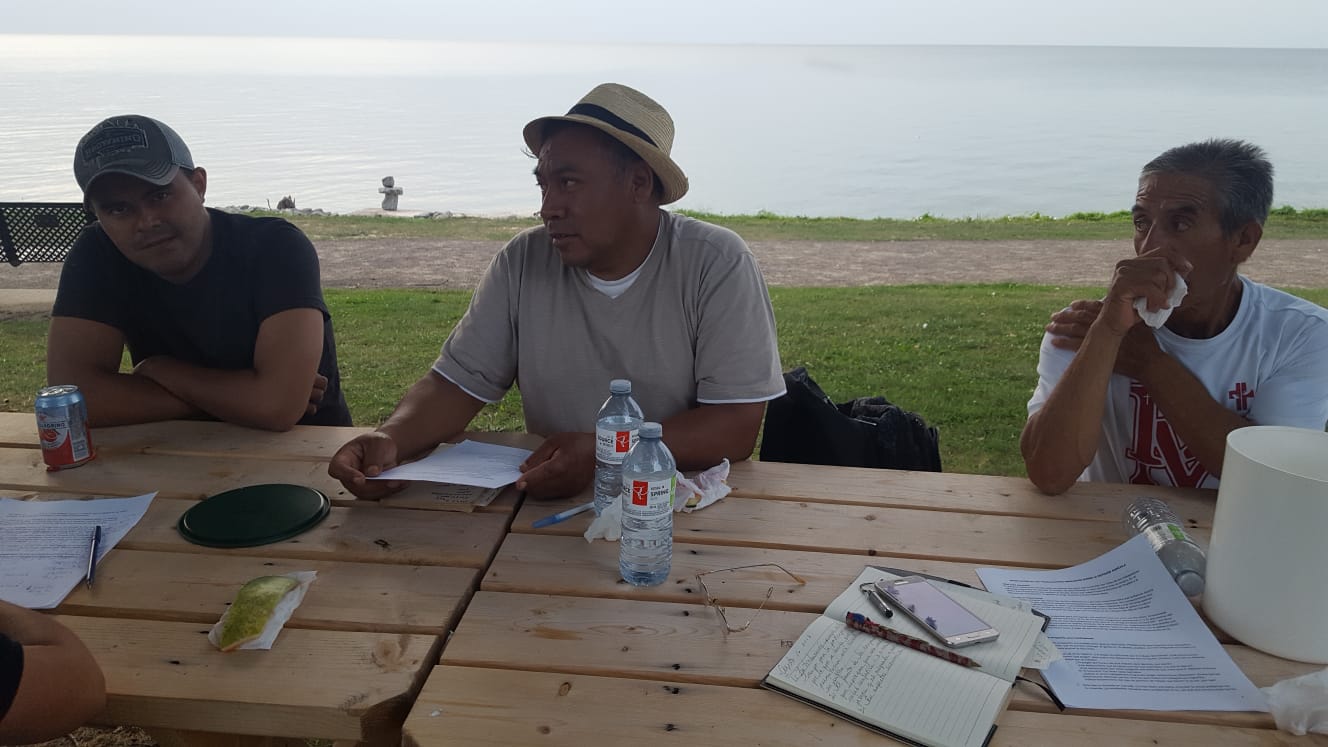

Luis Mendoza ¡PRESENTE! – Migrant Farmworker Leader
“I met Luis about 8 years ago. He was very interested in creating a network of fellow agricultural workers so that together we could fight and organize about injustices that workers go through.
Luis and I would talk to our coworkers, who little by little were uniting and sympathizing and empathizing with this fight. We made a small group and I remember him always enthusiastic, always trying to convince his coworkers, sometimes getting disappointed but he was always very convincing, always very firm.
He was convinced of the importance and value of the participation of us women in this matter of organizing ourselves. He knew that we women have a lot of strength, a lot of power. And also the very difficult stories that women live in this program – he understood the reasons why we make the difficult decision to leave our children.
Our friend Luis planted the seed, now the tree is growing a little. The rest depends on all of us. This is not easy work, it is meticulous work but it is worth it so we can pave the way for those who come after us and for the ones going through the struggle.
This is a loss not only of a person – a good comrade left us, a good friend left us, a social fighter left us. Someone with a lot of hope that the workers will organize and fight. The important thing is that we continue with the work that he always wanted. The fight goes on and this is the best way to celebrate him. ¡La lucha sigue!”
Ana, Migrant Farmworker
It was June 2019. In a church basement in Niagara, federal government officials met with 40 farmworker members of the Migrant Workers Alliance for Change.
The federal government wanted to talk about slight modifications to the employer-dependent work permit, which would change the name but keep the exploitation in place. Leading the workers was Luis Mendoza, a long-time farmworker and activist, who played an integral and active role in establishing Migrant Workers Alliance for Change in the Niagara region.
When Luis began to speak, the entire room went quiet. Everyone knew Luis.
“I have been coming to work in the SAWP program for 24 years. Today I want to tell you that I have given 24 years of my life to this country so Canada owes me something, Canada owes migrant farm workers something. We are owed permanent resident status.”
On May 19, 2021, Luis Mendoza died from complications due to COVID-19 in Mexico. After coming to Canada for nearly 30 years, he was not able to return this season. Luis wanted one day for his family and his children to join him in Canada, the country where he spent the majority of his life. He died without Canada paying back what it owed him.
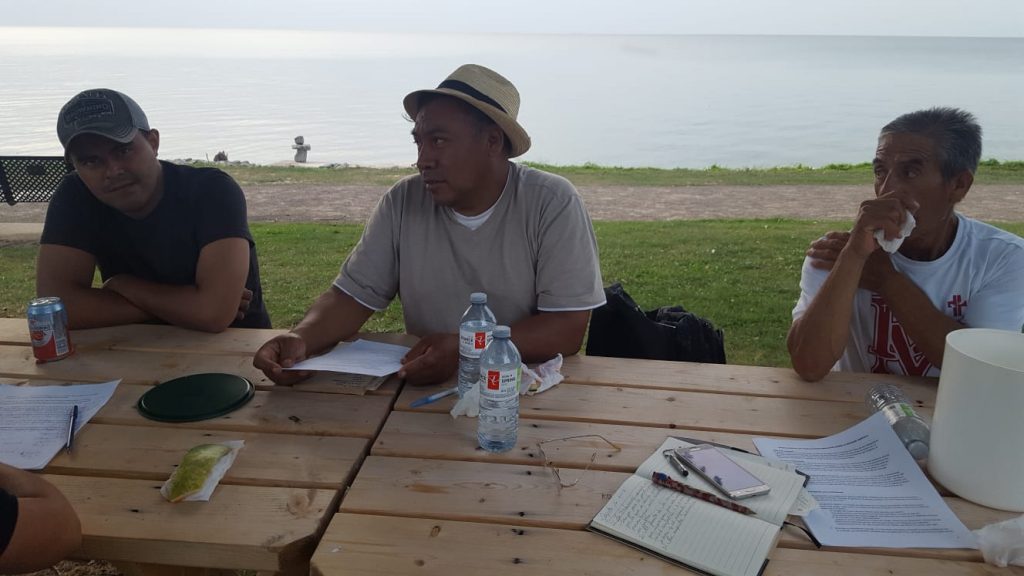
A natural born leader, Luis helped facilitate meetings of over forty farmworkers in June and July 2018. In a meeting with the federal government in August of that year, he read a joint statement written by the workers.
Once he had finished reading, he added:
“I want to emphasize – why do the employers only want cheap labour? They want workers to come but they do not want to pay the proper salaries. Many of us get sick. We have to pay when we go to the hospital. They want labour but they do not want to pay.
We are still living in slavery in the 21st century. Many of us have grown here, raised our families, but we demand that the government change the conditions of work. Many of the services we want and deserve are only available with PR.”
Luis knew that the only way for migrants to ensure dignity was to organize. He encouraged his fellow workers to unite and speak out to demand equal rights, dignity, and justice. Luis was not one to be quiet about prioritizing workers’ needs and voices. He offered strong critiques on labour unions and activist groups and he made sure they were heard.
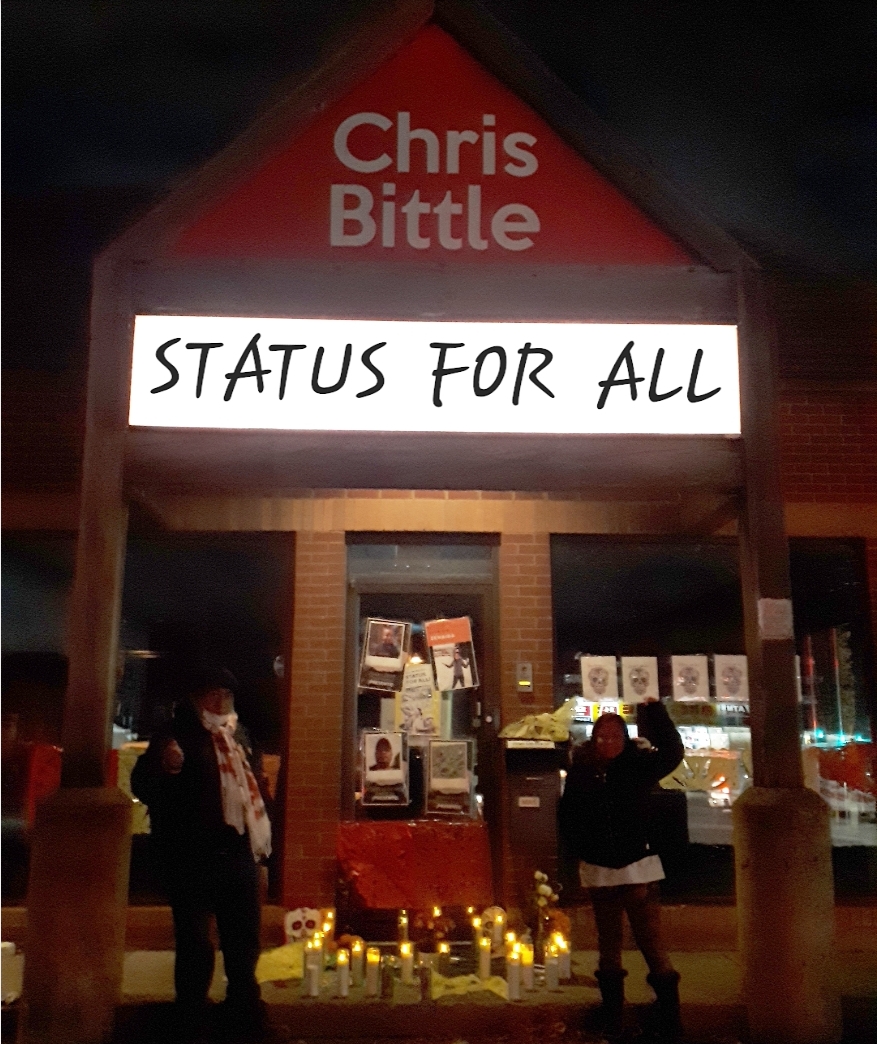
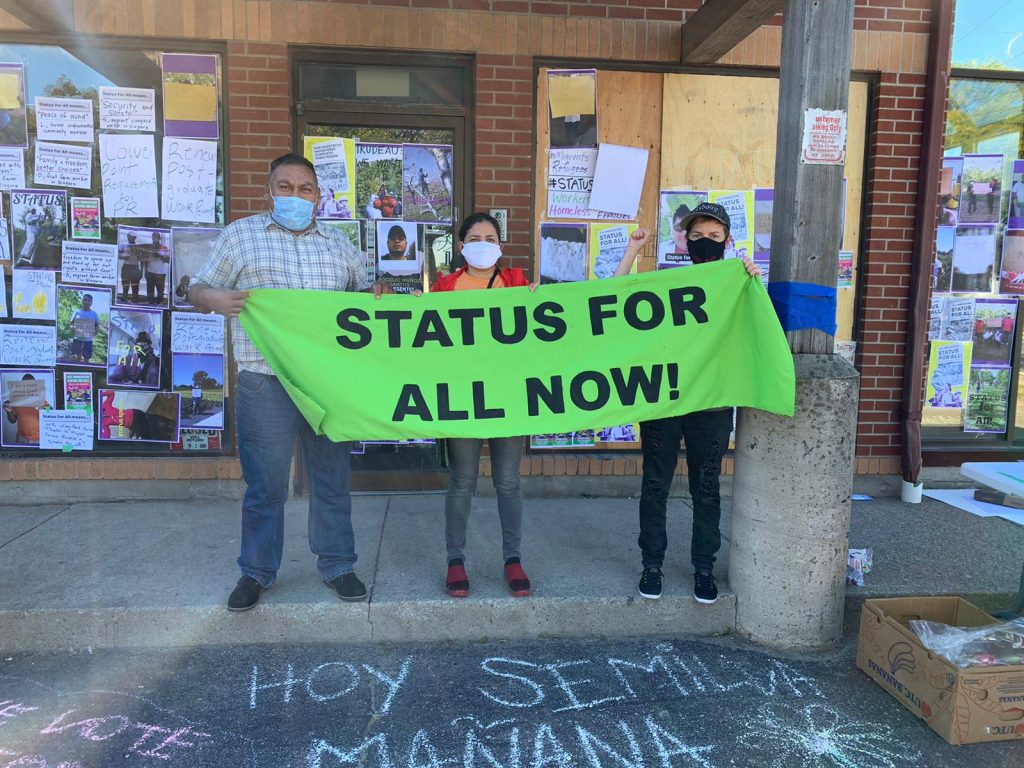
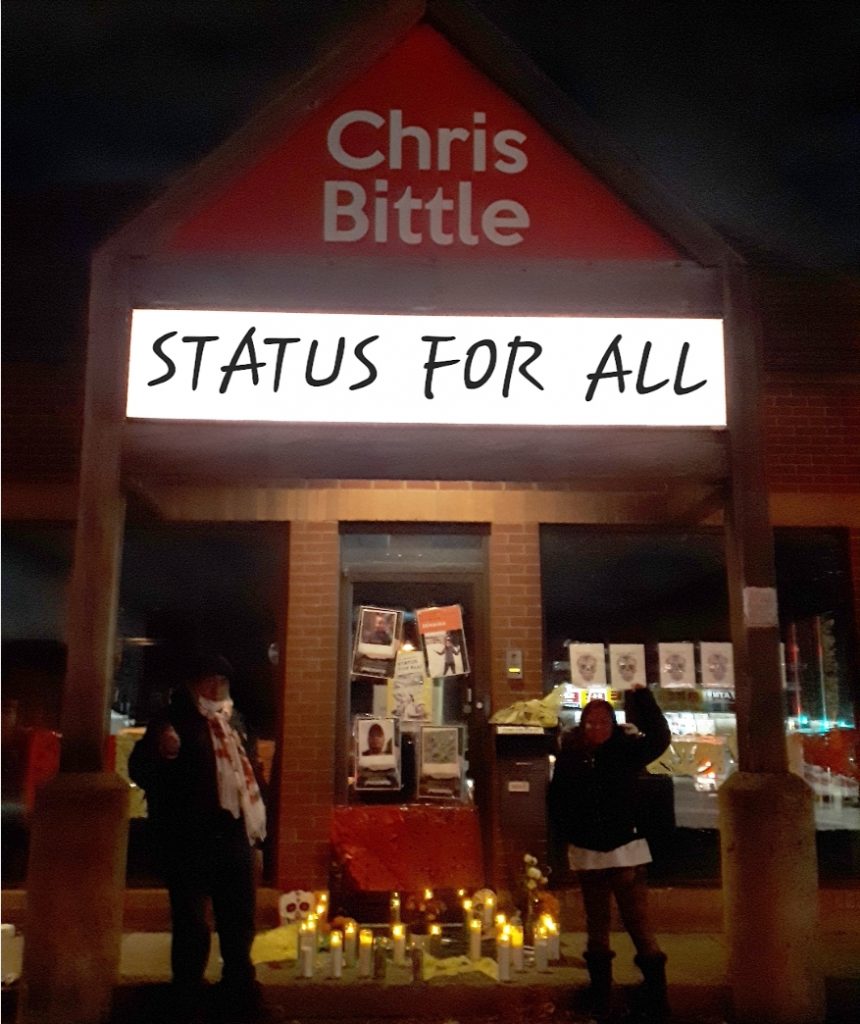
In 2019, when Pioneer farms, where Luis worked, caught fire, and farmworker housing was destroyed, Luis helped organize the workers and make sure everyone was taken care of. In 2020, when a COVID-19 outbreak hit the farm, Luis was there, supporting the workers, keeping them organized. One of his last actions as an MWAC member was building an ofrenda – an altar – for Day of the Dead on the front steps of a local MP’s office to honour farm workers who died from COVID-19 and to demand Status For All.
In June 2020, to launch a cross-country campaign for Status For All, Luis said:
“To this day, I have not seen any improvement in the treatment of agricultural workers. The precarious living conditions for the most part remain the same. The discrimination and racism with which we are treated by some employers has not changed! In Canada there are people who don’t even know we exist, that we are human. We, the invisible, grow the fruit and vegetables you eat and even the flowers on your table, but we lack the choice to leave bad jobs and resist the injustices inflicted upon us by abusive employers who treat us like slaves. I think that Canada owes us something and that this is the opportunity for it to pay its debt by giving us Permanent Residence. We leave behind our sweat here, working from sunrise to sunset. We have contributed to the development and economic growth of Canada. I think that what is just is that all migrants have access to Permanent Residence. Join us and call the prime minister to demand status now!!!”
And yet, after a quarter century of working in fields and farms, when he was sick, he didn’t get the healthcare he paid for here. Canada gave him nothing. But Luis helped establish an organization of migrant farm workers. He died, and his work for dignity and liberation lives on.
We will not rest until Luis’s dream comes to fruition, and each and every one of us that labours in the field has the same rights, dignity, and permanent resident status as any other person.
We say goodbye to Luis, but we know he remains in the struggle with us. Luis Mendoza ¡PRESENTE!
You can donate to support Luis’s family here: https://gofund.me/76c34d85



We are transforming!
Migrant Workers Alliance for Change is transforming!
We are focusing our energy on building a democratic membership-based organization of migrant workers to win labour and immigration justice.
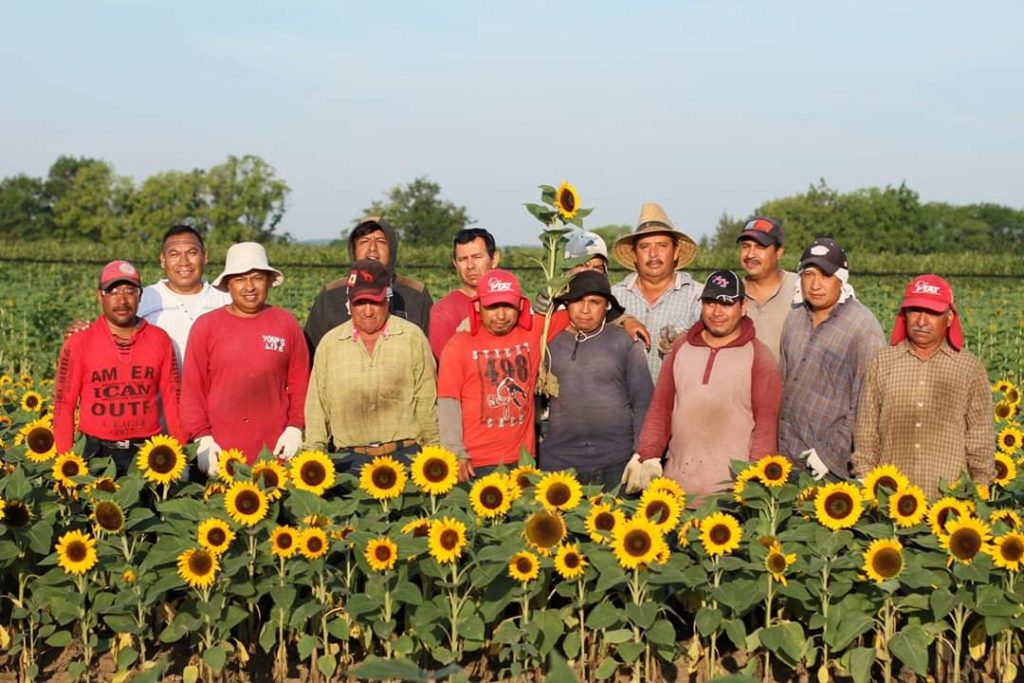
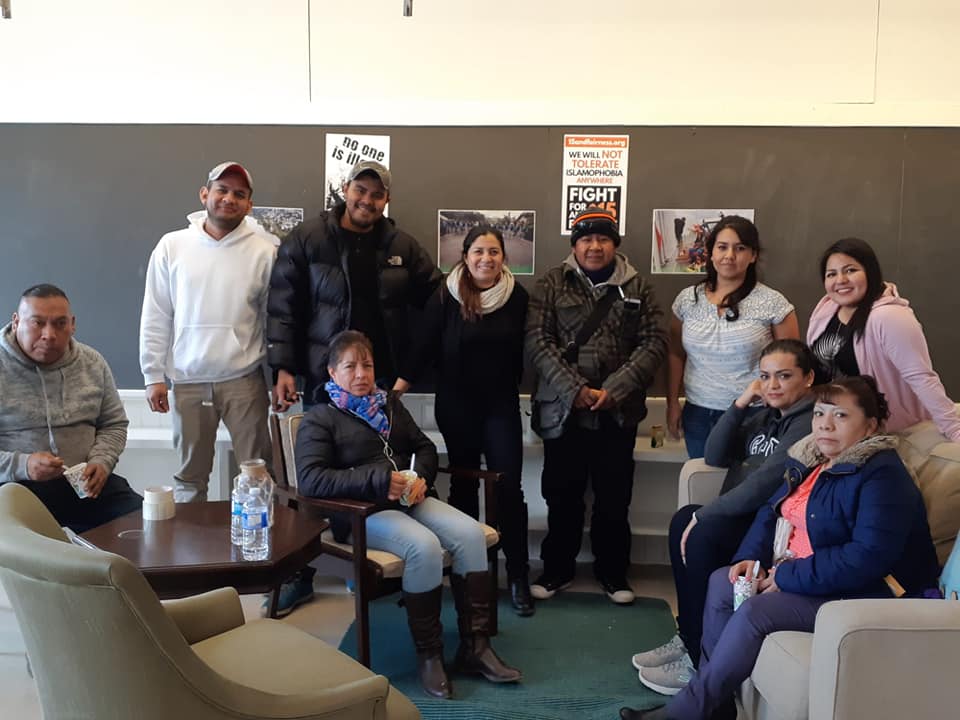
Over 12 years ago, we formed as a coalition of migrant and allied organizations. For the last three years we have been supporting the self-organization of farmworkers, care workers, current and former migrant students and others. This direct organizing work is growing and will be known as Migrant Workers Alliance for Change.
You can support our work by donating to support migrants uniting to win: www.MigrantWorkersAlliance.org/Donate
Become a sustaining donor! All new monthly donors will be entered into a draw to win 1 of 20 copies of Harsha Waila’s new book, Border and Rule!
The coalition formerly known as the Migrant Workers Alliance for Change is now the Migrant Rights Network – Ontario (MRN-ON). MRN-ON will continue to build solidarity and collaboration between migrants and allies in Ontario to win fairer laws. MRN-ON is the Ontario wing of the cross-country Migrant Rights Network.
Migrant Workers Alliance for Change (the organization) will continue to serve as the Secretariat for MRN-ON and the Migrant Rights Network.
Migrant Workers Alliance for Change’s new logo tells the story of our work. The colours representing migrant care workers, farmworkers, students, and all other migrants form a fist and a chain – symbolizing strength in unity. The break in the line is our commitment to openness and change as we welcome more migrant members into our fold.
We have a new digital home here at www.MigrantWorkersAlliance.org that is primarily aimed at migrants to get support and get organized: Migrant Care Workers, Migrant Farm Workers, Trabajador@s Agrícolas and Migrant Students.
Follow us on socials:
- www.fb.com/MigrantWorkersAlliance
- www.twitter.com/MWACCanada
- www.instagram.com/migrantworkersalliance
Migrant Rights Network – Ontario can be found here: www.MigrantRights.ca and on socials: @MigrantRightsCA
New PR Program Guide
Too many are excluded, and even if we qualify, we may not get in because of limited spots and impossible requirements. Act now and CALL PM TRUDEAU! Tell him to ensure Status for All – without exclusion – in the new immigration program.
Documents needed to apply:
- Letter from employers (current and/or previous, depending on the stream)
- Language test scores
- Immigration Medical Exam
- Police certificate
- Proof of completed study (for International Graduate stream only)
- Receipt of application fees payment
- Other supporting documents (pay stubs, T4s, photographs, etc)
- Completed application forms
See if you’re eligible: https://www.ircc.canada.ca/english/immigrate/trpr/eligibility.asp
Full application guide: https://www.canada.ca/en/immigration-refugees-citizenship/services/application/application-forms-guides/guide-5069-temporary-resident-permanent-resident-pathway.html
How to apply: https://www.canada.ca/en/immigration-refugees-citizenship/services/immigrate-canada/tr-pr-pathway/how-to-apply.html
If you do not qualify for this program, do not lose hope. This program was only created because migrants spoke up, we must continue to raise our voice to call for full and permanent immigration status for all. Call PM Trudeau and add your voice to ours!
*****
On April 14, 2021, the federal government announced the creation of a new short-term program for permanent residency. To qualify for the program, you must meet all of the following criteria:
- You must be working at the time of application. You must be authorized to work or be eligible to restore your work authorization. You do not necessarily need to be employed in the sector through which you qualify for the program. Self-employed work in any qualifying sector does not count.
- You must have temporary status in Canada. Most refugee claimants with work permits do not have temporary status. Undocumented people are excluded.
- If you are applying through Stream A or B, you must have 12 months (1560 hours) of accumulated work experience in the previous 3 years in the qualifying sectors.
- If you are applying through Stream A or B, you must prove CLB Level 4 language competency. If you are applying through the educational stream, you must prove CLB Level 5.
- You must not be inadmissible under the Immigration and Refugee Protection Act.
- You must be inside Canada, and cannot reside in Quebec. If you are in Quebec, you can apply but you must prove that you will not continue to live in Quebec.
- You must file a complete application online, and pay fees (approximately $1,133) when you apply.
- The streams are:
- STREAM A & B: 20,000 spots for temporary workers in 40 occupations in health care and 30,000 spots for temporary workers in 95 selected essential occupations including caregiving and food production and distribution. Click here for list of occupations.
- EDUCATIONAL STREAM: 40,000 spots for international students who have graduated with a minimum 8 month degree from a university, or a 16 month certificate or diploma from a Canadian college in the last 4 years, but no earlier than January 2017. You do not need any work experience for these two avenues. If you completed an education term shorter than the 16 month certificate, but your education led to a skilled trade you are also eligible. You must have met the conditions of your study permit throughout your studies. Click here for list of occupations and more details.
- French-speaking or bilingual candidates outside of Quebec are eligible through the same streams but do not have a cap on spots. See more here and here.
Applications will open on May 6 and will remain open for six months or when the caps are reached. Other final details will only be available when the program opens on May 6th.
If you do not qualify for this program, do not lose hope. This program was only created because migrants spoke up, we must continue to raise our voice to call for full and permanent immigration status for all. Call PM Trudeau with the tool above and add your voice to ours!
Requisitos de elegibilidad para el nuevo programa de residencia permanente
La información de este sitio web está sujeta a cambios, vuelva a revisarla con frecuencia.
El 14 de abril de 2021, el gobierno federal anunció la creación de un nuevo programa temporal para solicitar la residencia permanente. Para calificar para el programa, debe cumplir con todos los siguientes requisitos:
- Debe estar trabajando en el momento de la solicitud. Debe estar autorizado para trabajar, o ser elegible para restaurar su autorización de trabajo. No es necesario que esté empleado en el sector a través del cual califica para el programa. El trabajo por cuenta propia en cualquier sector calificado no cuenta.
- Debe tener un estatus de residente temporal en Canadá. La mayoría de los solicitantes de refugio con permisos de trabajo no tienen un estatus temporal. Las personas indocumentadas son excluidas.
- Si está solicitando a través de la Categoría A o B, debe tener 12 meses (1560 horas) de experiencia laboral acumulada en los últimos 3 años en los sectores calificados.
- Si presenta la solicitud a través de la Categoría A o B, debe demostrar su competencia lingüística al Nivel 4 de acuerdo con Canadian Language Benchmarks (CLB). Si presenta la solicitud a través de la Categoría Educacional, debe demostrar el nivel 5 de CLB.
- No puede ser considerado inadmisible bajo la Ley de Protección de Inmigración y Refugiados (IRPA).
- Debe estar corrientemente en Canadá y no puede residir en Quebec. Si se encuentra en Quebec, puede presentar una solicitud, pero debe demostrar que no continuará viviendo en Quebec.
- Debe presentar una solicitud completa en línea y pagar las tarifas (aproximadamente $1,133CAD) cuando presente la solicitud.
- Las categorías del programa son:
- CATEGORÍA A & B: 20,000 plazas para trabajadores temporales en 40 ocupaciones en el sector de salud, y 30,000 plazas para trabajadores temporales en 95 ocupaciones esenciales, incluyendo cuidados domésticos y la producción y distribución de alimentos. Haga clic aquí para ver la lista de ocupaciones.
- CATEGORÍA EDUCACIONAL: 40,000 plazas para estudiantes internacionales que se hayan graduado con un título mínimo de 8 meses de una universidad, o un certificado o diploma de 16 meses de un instituto o colegio técnico canadiense en los últimos 4 años, pero no antes del enero del 2017. No necesita ninguna experiencia laboral para postular en esta categoría. Si completó un programa de educación de menos de 16 meses, pero su educación le llevó a ciertos oficios calificados, también es elegible. Debe haber cumplido con las condiciones de su permiso de estudio. Haga clic aquí para obtener una lista de ocupaciones y más detalles.
- Los candidatos bilingües o de habla francesa fuera de Quebec son elegibles a través de las mismas categorías, pero no tienen un límite de plazas. Vea más aquí y aquí.
Las solicitudes abren el 6 de mayo y permanecerán abiertas por seis meses o hasta cuando se llenen todas las plazas. Mayores detalles sobre el proceso de solicitud solo estarán disponibles cuando el programa se abra el 6 de mayo.
Si no califica para este programa, no pierda la esperanza. Este programa solo se creó porque los migrantes alzaron la voz. Debemos seguir alzando la voz para pedir un estatus migratorio permanente para todos y todas.