Fill out the Government Survey for Migrant Workers and Speak Up for Your Rights!

The federal government is asking Temporary Foreign Workers to share their opinions. This is a great opportunity to speak up for your rights. 

Why should you do the survey?

  • It’s anonymous! 
  • You can tell the government what you really think.
  • It will only take you 10 minutes. 

But remember:

  • It’s not enough to just share your ideas.
  • Join with other migrant workers like you by calling or sending us a WhatsApp message to learn what else you can do. 

How do I complete the survey?

  • We have put all the sections from the survey here below, so you can read them and get inspired. 
  • The sections in the survey are bolded, and our suggested answers are highlighted in yellow 
  • You can read all the questions below and then click the link to start the survey

Click this link to start: Government Survey for Migrant Workers and Speak Up for Your Rights!

  • You can use the answers below to be inspired or you can copy and paste in the Federal government survey.

Section 1

Questions 1 to 5

These first five questions are personal questions such as: Have you ever been a temporary foreign worker in Canada? The year you worked in Canada, the type of job you did, and where you worked (province and city). 

Section 2 

Question 6 

Asks you if you are in a union. 

Section 3

Questions 7 to 24

In this section you will find questions about your experiences in Canada, such as infomation about your rights as a migrant worker you know, where did you find said information. Were you able to exercise your rights, living and working conditions, send a report to ESDC, open work permit for vulnerable workers. 

Remember to think of your worst experience in Canada when answering these questions. When you find a box use that opportunity to say why you want permanent resident status because it protects you from exploitation. Give examples of where you were mistreated. 

Section 4 

Questions 25 to 35

This section asks demographic information such as level of education, country of origin, language you speak, gender. Please respond acordingly. 

Section 5 

Question 36 to 39

This part is about your interest in coming back to Canada, and if you would apply for Permanent Residency. 

Use this section to reiterate why you want permanent residency for all and why you cannot apply, because there are no access to PR for some groups of migrant workers such as Farmworkers. 

Section 6 

Send the survey – This is where you will find the Submit button for the survey. 

Let’s unite together and make sure Canada does the right thing and grants Permanent Status For All – including people without papers and those who arrive in the future. Sign the petition

➡️ StatusForAll.ca

Do you want to stay informed about upcoming changes, events, and actions send us a WhatsApp message now and save our number in your phone contacts (This is a private and confidential list, and will not risk your job or status in any way): 

Farmworkers (ENG): 905-324-2840

Trabajadores Agrícolas: 647-807-4722

Care workers: 647-782-6633

Fishery workers (English and Spanish): 506-251-7467

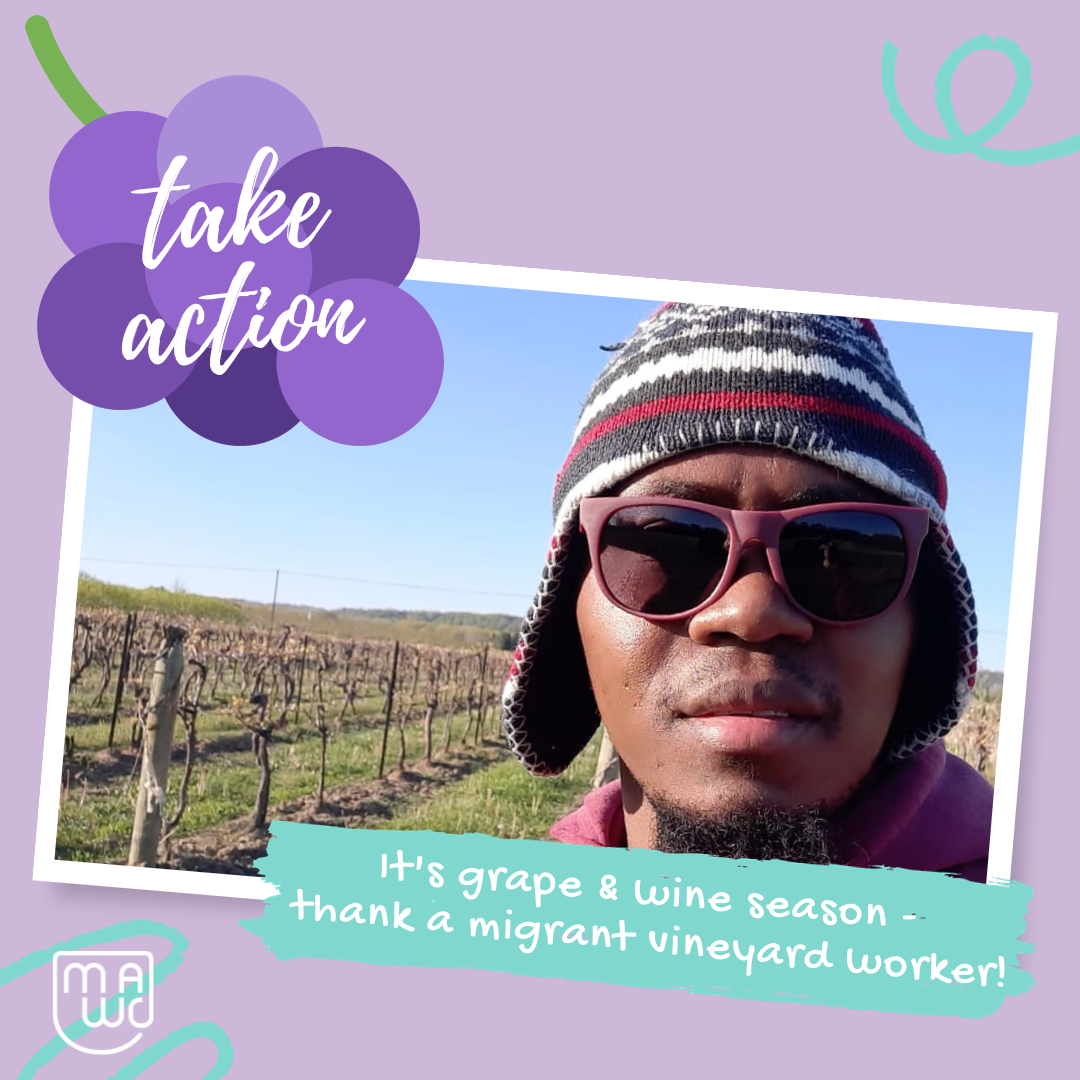
Celebrate grape and wine season by thanking a migrant vineyard worker!

Before a bottle of wine reaches you at the store or a glass of wine is set on your table at a restaurant, the grapes are grown, harvested, and processed by migrant vineyards workers from Mexico, Vietnam, and Caribbean countries.

We are separated from our families for over half a year and miss out on family birthdays, graduations, and funerals. It’s heartbreaking to be away for so long and the days can seem never ending. Your support during the season encourages us to keep pushing through. We want to hear from you!

Get the Facts: Family Open Work Permits for Farmworkers

You deserve to be together with your family – all migrants do! Sadly, the Canadian government keeps us separated by denying us permanent resident status. One way the government promises to unite migrant families is through measures like open work permits for family members.

What is the Family Open Work Permit?

For years, migrant workers like you have been speaking up and taking action together about family unity. In 2022 the Canadian government was pressured to allow more spouses and adult children dependents of some migrant workers to get open work permits in the country. (Read the government announcement here.)

This expanded government measure has 3 phases:

  1. Phase 1 started January 30, 2023 which is for family members of workers in the high-wage stream of the Temporary Foreign Worker Program or the International Mobility Program. Farm workers are excluded.
  2. Phase 2 will expand to family members of workers from the low-wage stream of the Temporary Foreign Worker Program, after consultations with bosses. This phase will still exclude farm workers.
  3. Phase 3 is consultations with bosses in the agricultural industry to see if including family members of farm workers will benefit them and their business. It is not guaranteed that farm workers will be included after the consultations.

You can see how farm workers are shut out at every phase, this isn’t fair! That’s why we’re uniting together to take action and win change to the unfair system. Join us: Send a WhatsApp message to 905-324-2840 for more information about how you can make a change with us.


Who can apply?

  • Family members of workers in high-wage streams of the Temporary Foreign Worker Program or the International Mobility Program

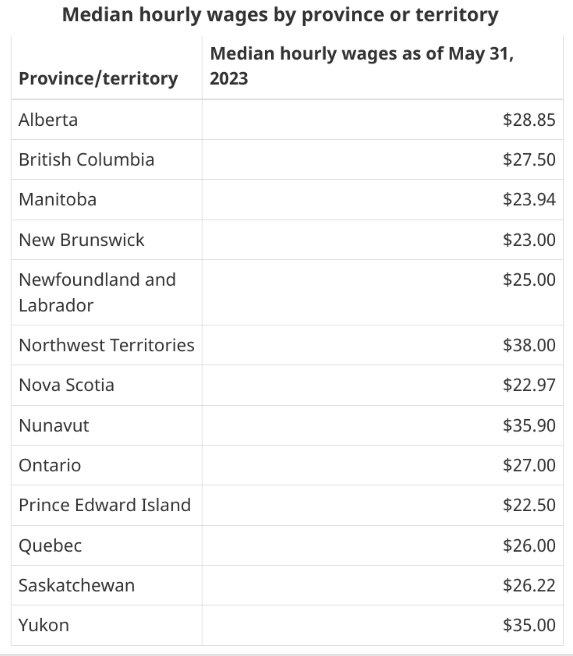
Not sure if your job qualifies as high-wage? You must be earning what’s called the “median hourly wage” or higher, which depends on what province in Canada you work.

Current wages for farmworkers in Canada are as low as $13/hour and we deserve so much more! That’s why we’re also fighting for higher wages, so our families will have more opportunities.

Do you agree that your family deserves more? Send a WhatsApp message to us at 905-324-2840 to learn how you can join our fight to win a better life!


Who cannot apply?

  • Farm workers in the Seasonal Agricultural Workers Program and the Agricultural Stream (Ag-Stream) of the Temporary Foreign Workers Program
  • Fishery workers who are not in the high-wage stream
  • Any migrant worker in the Temporary Foreign Worker Program who is paid low wages
  • Migrants with Open Work Permits for Vulnerable Workers who are paid low wages
  • Migrants with work permits who are also refugee claimants or H&C applicants
  • Migrants without papers/immigration status

To read the full requirements, tap this link: migrantworkersalliance.org/familyworkpermit

So many people are shut out of this measure, it’s not fair.

That’s why migrant workers are uniting together to take action and win change, including permanent resident status for all, so that we can all be together with our families!

Migrant Welcome UN Slavery Rapporteur Call for Permanent Resident Status for All

Media Contact: Syed Hussan, 416-453-3632, hussan@migrantworkersalliance.org 

Migrant Welcome UN Slavery Rapporteur Call for Permanent Resident Status for All

Toronto, September 6, 2023 – The Migrant Workers Alliance for Change (MWAC) welcomes the statement in Ottawa from United Nations Rapporteur on Contemporary Forms of Slavery Professor Tomoya Obokata today in which he called for “paths to longterm or permanent residency be open to all migrant workers”. 

The UN Rapporteur was in Canada on a country mission where he met with migrants including 40 members of (MWAC), Indigenous people, people with disability and incarcerated people, persons of African descent and other groups facing exploitation. In his End of Mission press conference today, Professor Obokata said that  was “disturbed” that “certain categories of migrant workers are made vulnerable to contemporary forms of slavery in Canada by the policies that regulate their immigration status, employment, and housing in Canada, and he is particularly concerned that this workforce is disproportionately racialized, attesting to deep-rooted racism and xenophobia entrenched in Canada’s immigration system”. 

He also reiterated that “Newcomers who enter Canada outside of TFWP experience similar precarity. International students who work in excess of the permitted 20 hours per week, asylum-seekers awaiting their work permits, undocumented migrant workers, and those that have lost status are vulnerable to many of the same abusive practices, as they may not report abuses for fear of deportation. Employers who are aware of their status may exploit them under threat of denouncing them to immigration authorities.”

The UN Rapporteur also echoed a call for regularization of all undocumented people, a call that was also made in June 2023 by the UN Rapporteur on Migration.

“The United Nations Rapporteur has yet again stated what we all know, and migrants have been saying for decades – a two-tier system of immigration where over 1.2 million new temporary permits are being issued each year breeds exploitation, exclusion and violence. All migrants, including undocumented people, migrant students, workers and refugees, must have permanent resident status to protect themselves and ensure a fair society,” said Syed Hussan, executive director, Migrant Workers Alliance for Change.

Prime Minister Trudeau promised regularization of undocumented people and permanent resident status for migrant students, workers and families in a mandate letter commitment in December 2021, 20 months later, migrants continue to suffer. 

Background:

Migrant Workers Alliance for Change

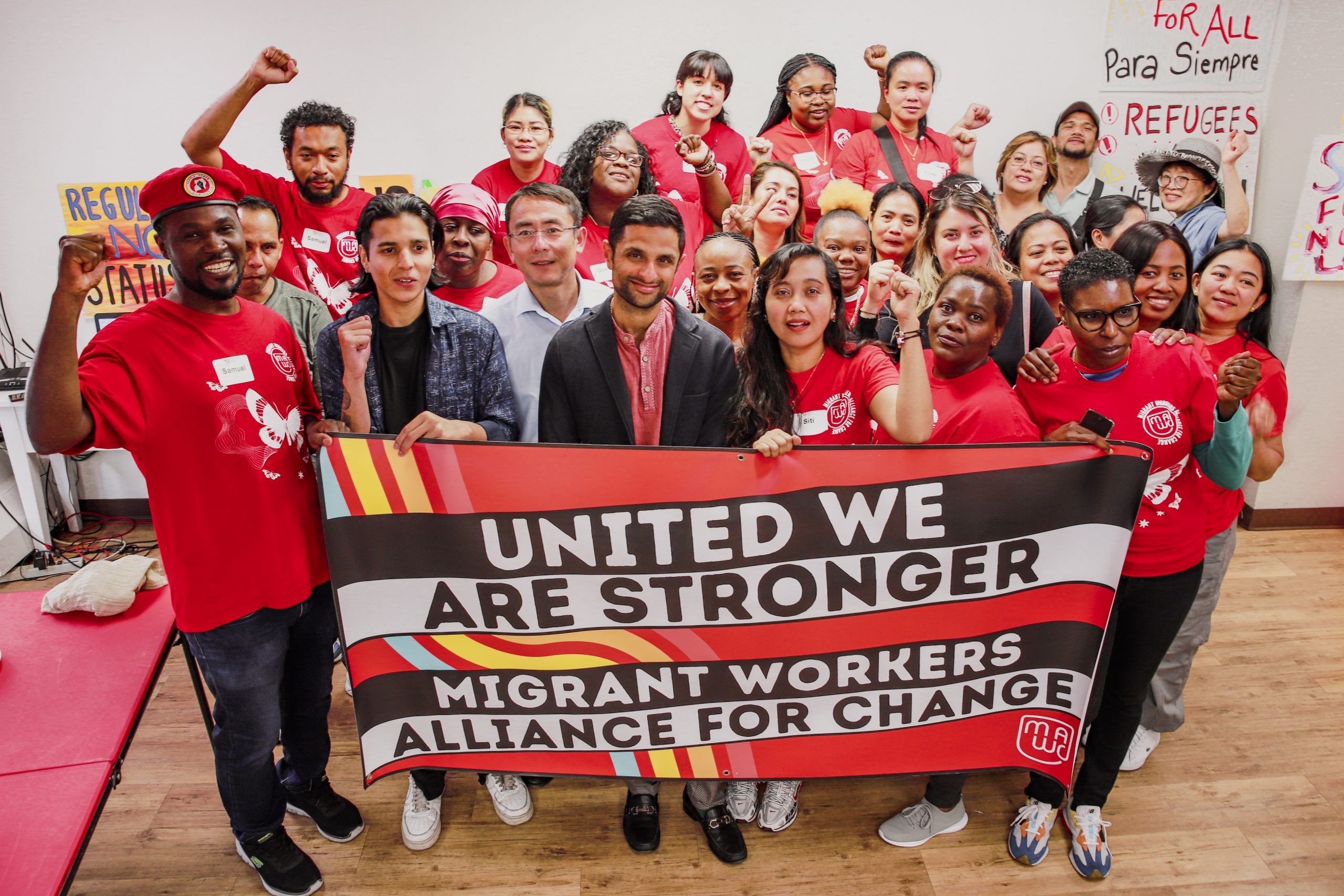
Migrant Workers Alliance for Change is a migrant-led, membership based organization of farmworkers, fishery workers, careworkers, undocumented people and current and former international students uniting for immigration and labour justice. 

www.MigrantWorkersAlliance.org 

Amplify Migrant Farmworker Voices in New Heat Stress Regulations

Under pressure from migrants, the Ontario Ministry of Labour, Immigration, Training, and Skills Development has proposed changes to the Occupational Health and Safety Act (OHSA) to add heat stress requirements.

These heat stress requirements are an important step forward but have two major gaps: there are no avenues for migrants to make complaints safely when employer don’t follow the requirements; and they don’t apply to migrant farmworker housing. In addition, a number of the requirements are vague and subjective and too many are not mandatory.

Even then, we can be certain that big business lobby groups will oppose even these requirements, unwilling to make any changes to protect the lives and health of working class migrant farmworkers.

This is why we at the Migrant Workers Alliance for Change (MWAC) are speaking up, and we need you to join us!

67 migrant agricultural worker leaders in MWAC jointly identified demands on behalf of 1,454 migrant farmworker members in Ontario.

We are calling on organizations across Ontario to write letters in support of these migrant demands using the template above!

Migrant demands include:

  • Proactive enforcement, migrant worker specific anti-reprisal mechanisms and protections
  • Migrant farm worker housing included in heat stress regulations
  • Mandatory 10 minute paid break in a cool shaded area, every 2 hours during heat and humidity warnings added to regulations
  • Mandated access to hazard pay during heat and humidity warnings
  • and more…

Migrant farmworkers want better protections, not only from heat-related illness, but also from reprisals that come from speaking up for labour and human rights. These reprisals include eviction from employer-provided housing, job termination, deportation, and being banned from working in Canada in the future. Without permanent status, migrant workers are denied the power to protect ourselves from employer retaliation and abuse. Denial of permanent resident status also means exclusions from basic services like healthcare

Migrant farmworkers: You have a voice, send a message to the new PM!

Take action below and let the new Prime Minister of Canada, Mark Carney, know that the world is watching! Let’s unite together and make sure Canada does the right thing and grants permanent status for all – including people without papers and those who arrive in the future.

Your message will only be sent once you hit the red “ADD YOUR NAME” button at the end.


Note: Your name and contact information will be kept confidential. This form is created by Migrant Workers Alliance for Change, a migrant-led worker rights organization whose leaders and members are migrant farmworkers, care workers, international student workers, and undocumented workers. Learn more about us by tapping the link here: migrantworkersalliance.org

Family Work Permits for Agricultural Workers


1,279 migrant farm workers participated in a survey on family work permits.

98.3% of survey respondents said that the government of Canada should allow all migrants, including those in agriculture, to be together with their families and receive work permits.

93.45% believe seasonal workers (8 months or less contract) should be able to have family with them in Canada. There should be no exclusion for seasonal workers.

89.53% of survey respondents said that they would rent accommodations for their families.

Workers clearly know the options available to them and the potential difficulties they may face. 58% of respondents noted that finding housing would be difficult, and 55.16% noted difficulty with the high cost of rent. Just under 50% of respondents were also concerned about getting jobs for spouses and children. Over 40% were also concerned about access to healthcare, and access to schooling and cost of travel.

When asked Would you bring your family if you were not sure you could support them or afford it? An incredibly high 97.3% of the respondents said No.

This shows that workers will not choose to bring their families if there are any concerns about getting rental properties, or paying for their travel or housing. Even if a program was created, workers would make individual choices based on their circumstances before deciding to apply for work permits.

93.02% of survey respondents want permanent resident status on arrival because it’s the only way migrants can access essential services and protect themselves against abuse.

In short, migrant farmworkers are united in their call for family work permits and permanent resident status for all.

These submissions are jointly made by Migrant Workers Alliance for Change (MWAC), RATTMAQ: Réseau d’aide aux travailleuses et travailleurs migrants agricoles du Québec, Cooper Institute, Sanctuary Health and RAMA.

For further information, please contact info@migrantworkersalliance.org.

What is the Open Work Permit for Vulnerable Workers?

  • It is the last resource for workers who hold a closed work permit (employer-specific) and who are at risk of experiencing abuse or are already experiencing abuse with the employer they currently have a contract with 
  • Workers can apply while they are still working with the employer as well as after they have left the farm or workplace Note: The sooner you apply after leaving the farm, the better as IRCC might question why you didn’t apply right away.

How do we support you in this process?

  • We support you to prepare part of the application then we will refer you to a partner organization to finalize the application at no cost to you.  When possible we can refer you to a local organization in the province you are living wheter that is the province where the farm is or the province you are currently living.  .
  • We can assist you in writing your narrative if you have literacy limitations (your case can take a bit longer)
  • We write a letter of support for your case and follow up with you during the process until your case concludes (approved or refused) . We might be able to continue supporting you if you are refused depending on your case and if our partner organization makes a case for workers to reapply.
  • You need to write a narrative. This is a letter explaining  with as many details as possible including  who, when, where , how.  The more details the better, you need to paint  a picture for the immigration officer who will review your case and who might not be familiar with the conditions at the farm or workplace so it is important to give details and express your feelings in this letter. Use expressions like: I felt sad, angry, disappointed, etc.
  • Provide evidence: We need at least 3 pieces of evidence which can include, photos of you at work,  copy of work contract, paystubs, photos of working conditions, housing conditions or short videos preferably 1 minute or less, doctors notes, text with employer or human resources (HR), letter of support from witnesses such as friends and acquaintances, anything you can think it will support the details on your letter
    • You need to provide the following documents:
      • Copy of current work permit (If your permit has already expired you are not eligible to apply)
      • Copy of passport and visa (passport needs to be valid for at least a year  if is less than a year, you need to renew it before you can apply), but is your situation is dire and you need to leave your employer, you can apply for the open work permit, but it will only be approved for however many months you got left on your passport.
      • An active email address and best time to reach you.

How long does the process take?

  • The process can take anywhere from 1-3 months depending on many factors including if your narrative and supporting documents need to be translated
  • Your availability to provide documents and follow up on your case 
  • If the organization we will refer you to has a waiting list.

Important things to consider if you decide to apply:

  • You might no longer be able to participate in your country’s farm work program (Seasonal Agricultural Workers Program) as your liaison officer or consulate official might say you breached your contract by leaving the employer. This is not fair  and migrant workers like you are fighting for solutions to these unfair rules. If you want to know more on how you can join, let us know and an organizer will follow up with you. 
  • You need to have a plan if you are leaving your employer we are not able to support you  finding housing and it can be difficult and expensive. 
  • Make sure to put some money aside if you decide to leave your employer so you can support yourself while waiting for your permit to be processed.
  • Have a plan B in case your Work Permit is  refused.
  • An open work permit allows you to work in any job, anywhere in the country for any employer. You will not be part of a program that will connect you with an employer. 
  • Keep in mind that you will need to look for a job yourself. There are agencies that could help you with job search, but MWAC does not find employment for workers.

If you have read this document and think you qualify for the open work permit for vulnerable workers , please get in touch with us!

Farm Workers 905-324-2840 

Fishery workers 506 251 7467

Send a message with the code “Open Work Permit”, your full name, and the city you currently are and we will get back to you after September 5th as we currently have a waiting list for new cases.

For more details of what is considered  abuse, what types of evidence, who can apply  etc,  see the IRCC website: https://www.canada.ca/en/immigration-refugees-citizenship/services/work-canada/permit/temporary/vulnerable-workers.html

Migrant food and farm workers support Metro workers on strike!

Last year alone, Canada’s 3 largest grocery stores took $3.6 billion in profit. That money belongs to workers, including migrants like you – people who grow, harvest, transport, and sell food. Right now nearly 4,000 workers at Metro (which also owns Food Basics) are striking for better wages & work hours and job security – things that all of us deserve! Sign below to show your support for workers taking action to win a better life for all of us.